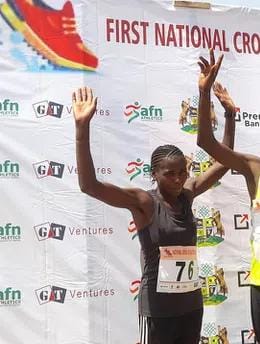

Nigeria’s long-distance runner Blessing Solomon has been handed a three-year ban after failing a doping test, deepening concerns over anti-doping compliance in Nigerian athletics.
The sanction was confirmed by the Athletics Integrity Unit (AIU) following the detection of the prohibited substance Trimetazidine in a urine sample taken during the Abuja Premium Trust Half Marathon on 6 December 2025.
Read Also: Enyimba Unveil New Coach Emmanuel Deutsch, Eke Resumes as Sporting Direcor in Kanu’s Absence
The decision was issued from the AIU’s headquarters in Monaco after laboratory analysis conducted at a World Anti-Doping Agency–accredited facility in Lausanne, Switzerland.
According to the ruling, Solomon provided an in-competition sample during the race, which returned an Adverse Analytical Finding.
The AIU stated that the athlete did not have a valid Therapeutic Use Exemption for Trimetazidine and that there was no evidence of any procedural lapse in the testing or analysis process that could have influenced the outcome.
The 28-year-old was formally notified of the charge on 5 February 2026 and was provisionally suspended the same day.
Under World Athletics Anti-Doping Rules, the case constituted violations relating to both the presence and use of a prohibited substance.
Within days of notification, Solomon opted not to challenge the finding.
In a written response submitted on 11 February, she accepted the violation and the associated consequences, while insisting she had never knowingly taken any banned substance to enhance performance.
Trimetazidine is listed on the 2025 Prohibited List of the World Anti-Doping Agency (WADA) as a non-specified substance under category S4, meaning it is banned at all times, both in and out of competition. As a non-specified substance, a first violation ordinarily attracts a four-year ban.
However, the rules allow a one-year reduction when an athlete admits the offence promptly and accepts the sanction.
Having met those conditions, Solomon’s ban was reduced to three years, effective from 5 February 2026. In addition, all her results from 6 December 2025 onward have been annulled, including the forfeiture of any titles, medals, points, prize money and appearance fees earned during that period.
The AIU confirmed that this was Solomon’s first anti-doping offence and that she waived her right to a disciplinary hearing, bringing the case to a close at that level. The decision will be published on the AIU’s official platform in line with its disclosure rules.
While the ruling stands as final for now, the athlete, WADA and Nigeria’s National Anti-Doping Committee retain the right to appeal to the Court of Arbitration for Sport in Lausanne.
For Solomon, the ban means an enforced absence from competition until early February 2029, while for Nigerian athletics, it represents another reminder of the sport’s ongoing battle to uphold the integrity of competition under the global anti-doping code.