

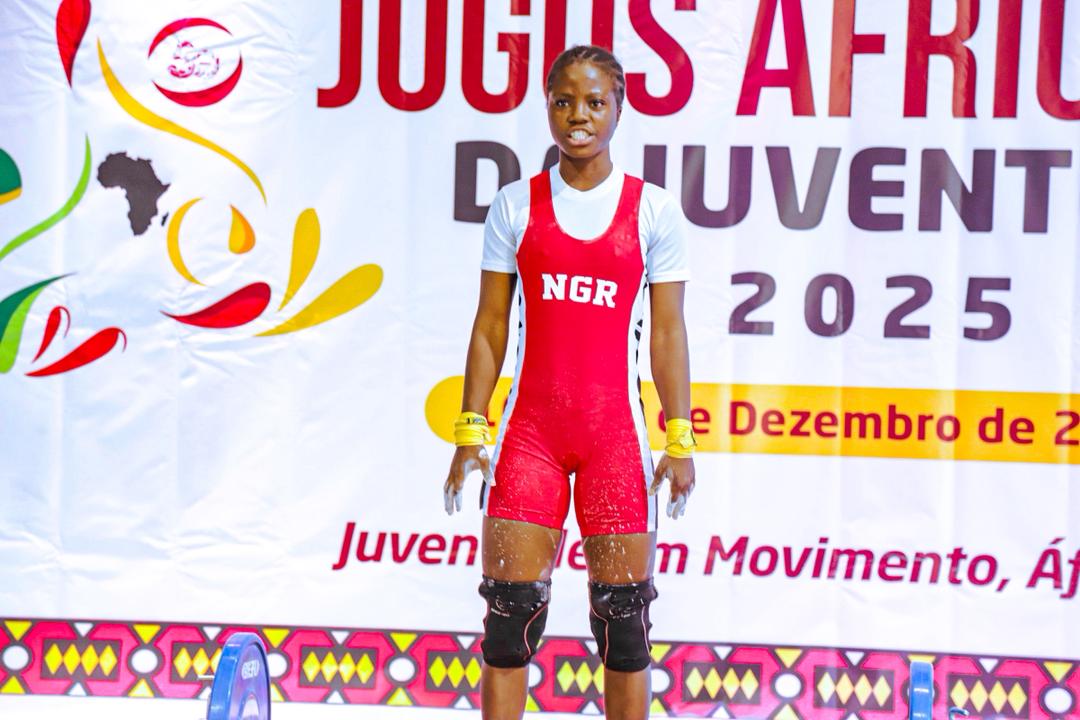

Team Nigeria’s outing at the ongoing Africa Youth Games (AYG) in Luanda, Angola, is fast becoming a strong validation of the country’s renewed focus on grassroots sports development under the leadership of the National Sports Commission (NSC).
The Games, designed to secure the future of African sports by nurturing young talents, have been approached with clear intent by Nigeria.
Acting on the presidential mandate of President Bola Ahmed Tinubu, GCFR, the NSC has placed premium emphasis on building a sustainable talent pipeline that begins from the grassroots and progresses deliberately toward elite performance.
This commitment is reflected in the President’s appointment of a Senior Special Assistant on Grassroots Sports Development and the NSC’s alignment with that vision.
Rather than treating the Africa Youth Games as a routine multi-sport outing, the Commission adopted a focused and strategic approach, ensuring that participation was purposeful and developmental.
Innovations such as the Invited Junior Athletes (IJA) initiative have been central to this philosophy. The programme is designed to keep outstanding young athletes engaged in structured competition, consistent training, and gradual exposure, with a clear pathway to elite status. Platforms like the Africa Youth Games are being maximised to accelerate that process.
In Luanda, the results have been emphatic. Beyond exposure, medals have flowed steadily, and a new generation of Nigerian athletes is growing accustomed to podium finishes.
At the time of reporting on Thursday afternoon, Team Nigeria had amassed 20 gold, eight silver, and 10 bronze medals.
Athletics laid the early foundation with six gold medals, while table tennis, badminton, and beach volleyball added three more.
However, the biggest impact has come from weightlifting, which began late due to logistical issues but has since delivered 11 gold medals in just two days — accounting for more than half of Nigeria’s total gold haul.
Importantly, Nigeria’s delegation was deliberately streamlined. Only 54 athletes across 12 sports were selected, following strict due diligence to avoid turning the Games into a jamboree.
That decision, rooted in a long-term development framework introduced at the start of the current NSC dispensation in October 2024, is now being vindicated by results.
As the Games wind down, expectations remain high for more podium finishes, reinforcing optimism about the future of Nigerian sports and the effectiveness of a grassroots-first strategy.






 in Luanda, Angola, is fast becoming a strong validation of the country’s)