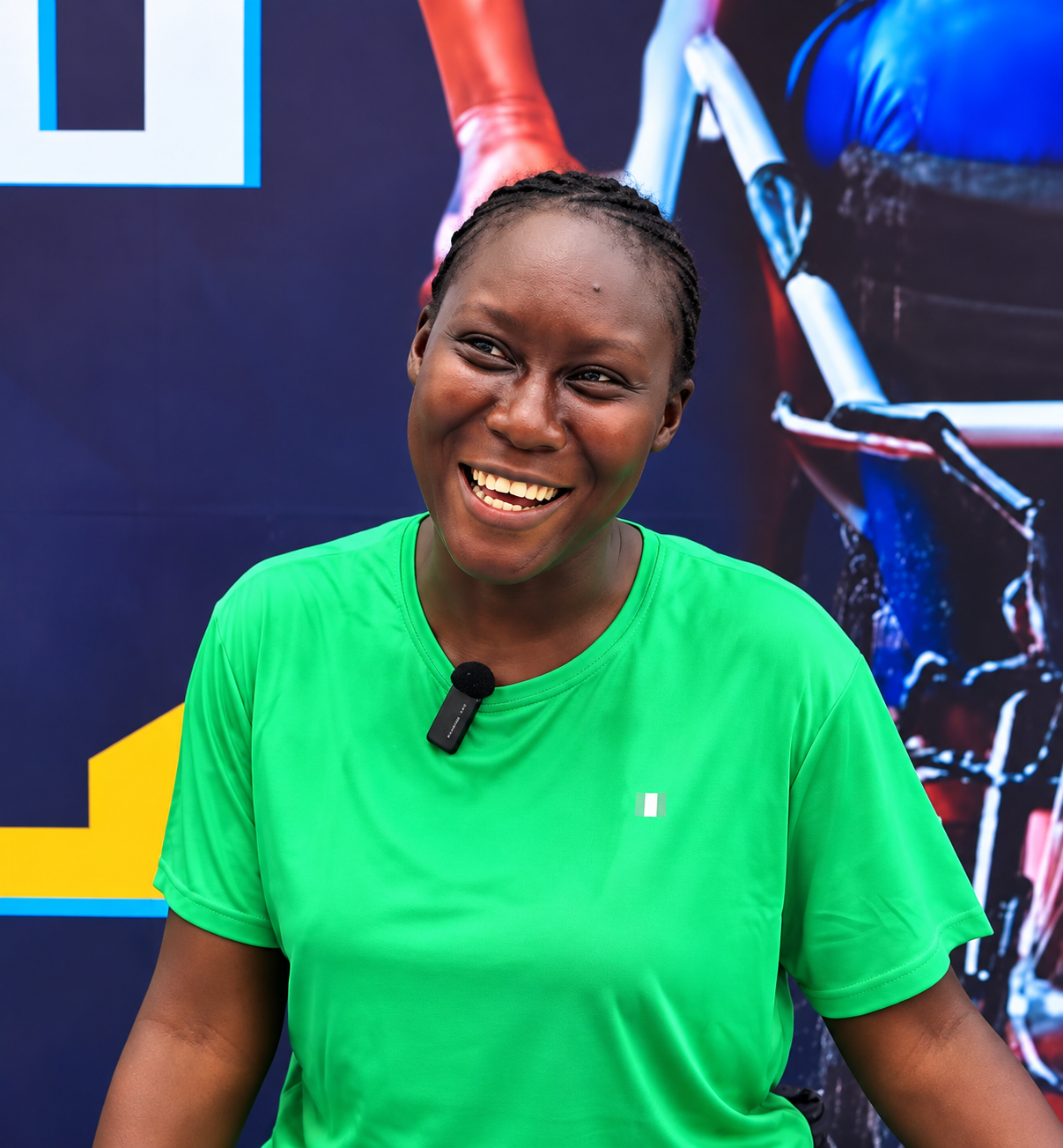
Nigeria wheelchair basketball captain Ijigbamigbe Gbemisola Olubisi has opened up about a painful chapter of her childhood, saying she was left with a lifelong impairment after what she described as the administration of an expired polio vaccine before her first birthday.
Ijigbamigbe, who has gone on to represent Nigeria in wheelchair basketball, made the revelation while reflecting on her childhood, family support and the journey that transformed what could have become a story of limitation into one of sporting achievement.
Speaking in an interview with Sports247, the national team captain said she contracted polio when she was still a baby and attributed the condition to an expired vaccine she received.
“It is polio. Before I was a year old, an expired polio vaccine was what caused this,” she said.
Her account paints a distressing picture: before she was old enough to understand what had happened, her life had already changed permanently.
However, it is important to note that Ijigbamigbe’s statement about the expired vaccine represents her account of the cause of her impairment. Without independent medical records or other evidence, the claim cannot be presented as an independently established medical finding.
What followed, according to Ijigbamigbe, was a childhood that could easily have been defined by exclusion but instead became shaped by a family determined to ensure she never considered herself less capable than other children.
Her parents sought therapy for her at an early age, while at home she was treated like her siblings and encouraged to participate in the same activities.
“I had a very great childhood. I wasn’t made to feel less of who I am. I didn’t experience the stigma,” she recalled.
Rather than constantly reminding their daughter of what she could not do, her family concentrated on what she could.
“Everything my siblings were doing, I was made to do it. I wasn’t put aside and told that I couldn’t do this,” she said.
That upbringing would eventually become important when sport entered her life.
Wheelchair basketball offered Ijigbamigbe an opportunity not merely to participate in sport but to compete at a level that would eventually see her emerge as a leader for her country.
Her father immediately supported her decision to play, but convincing her mother proved more difficult.
Like many parents, her mother was initially concerned about the physical demands of the sport and what participation could mean for her daughter.
Ijigbamigbe refused to allow those fears to determine her future.
She eventually persuaded her mother to attend one of her matches and see for herself what wheelchair basketball had become in her life.
The experience changed everything.
“She was really proud. She was so happy when we went for the qualifiers and the Commonwealth Games,” Ijigbamigbe recalled.
For a child who says her life was permanently altered before she celebrated her first birthday, becoming a national team captain represents a remarkable journey.
But Ijigbamigbe does not want her story to generate sympathy alone.
She wants it to become encouragement for another child living with a disability who may currently believe that certain dreams are beyond reach.
Her message to young para-athletes is therefore emphatic.
“You can do it. Do not limit yourself; there’s nothing stopping you,” she said.
“There is ability in disability. It is not just a saying but a fact.”
Ijigbamigbe acknowledged that determination does not magically remove the difficulties faced by people living with disabilities.
“It is not going to be easy, but you can do it,” she added.
Her story began, by her account, with an event she never had the opportunity to choose or control.
But what came afterwards became a story she could help write herself.
Before her first birthday, Ijigbamigbe says her life changed forever. Years later, she is not defined merely by what happened to her as a baby — but by how far she has travelled since, all the way to captaining Nigeria.