
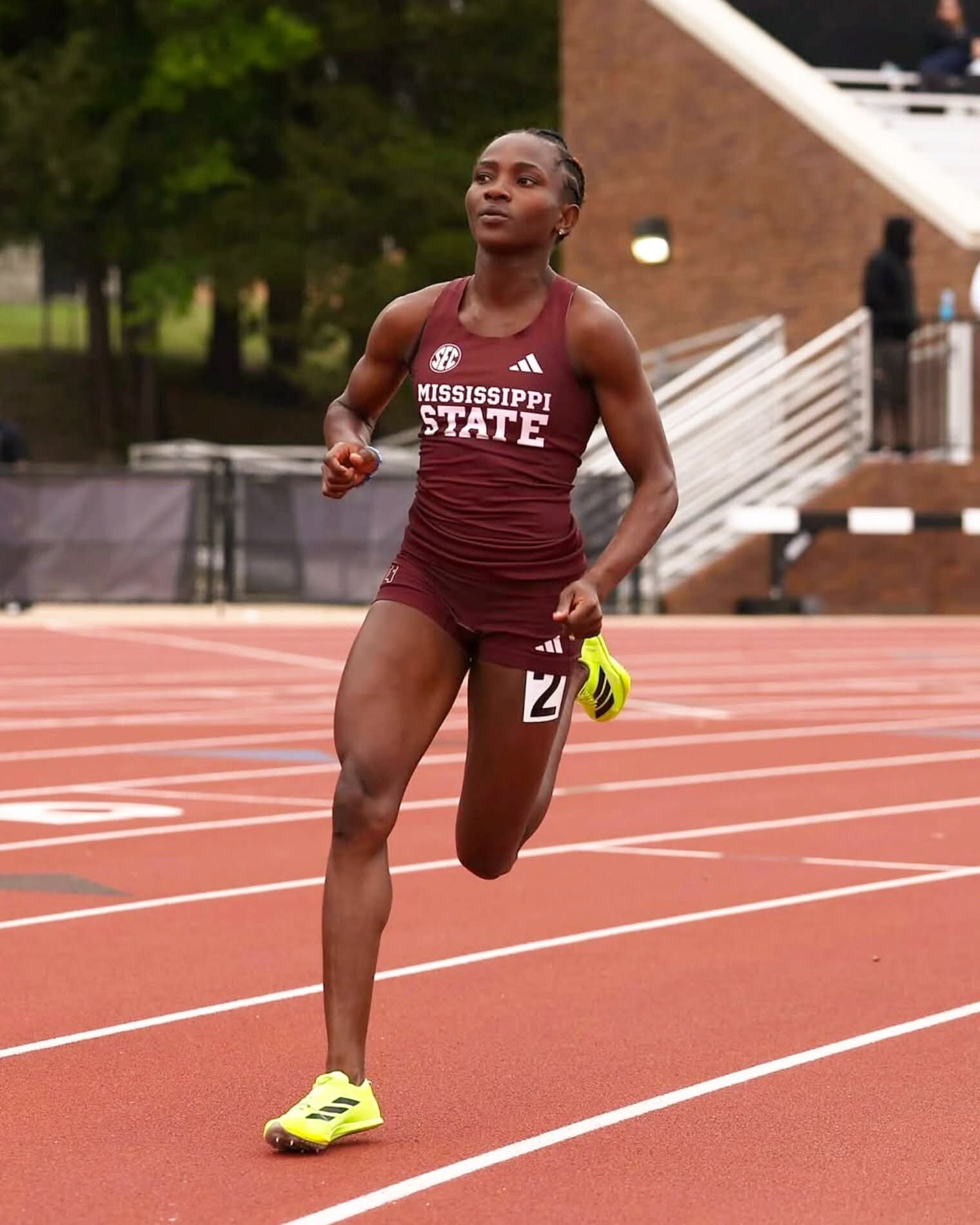
Nigeria’s athletics contingent produced another memorable outing in the United States as Samuel Ogazi and Rhoda Adisa both shattered national records during a thrilling SEC Championships competition.
Adisa stole the spotlight in the women’s 800m after producing a sensational run of 2:01.56, a massive Personal Best that now stands as the new Nigerian national record in the event.
Read Also: South Africa praises Nigeria’s Readiness for 2026 Commonwealth Fencing Championships
The impressive mark eclipsed the previous record of 2:01.89 set by Fatimoh Muhammed in 2007, bringing an end to an 18-year wait for a new women’s 800m national standard.
Her rise has been nothing short of remarkable.
Entering the 2025 season with a Personal BestHasan 2:06.21, Adisa has made rapid progress within a short period, cutting nearly five seconds off her previous best to become Nigeria’s fastest woman ever over two laps.
The performance also signals a growing emergence of Nigerian athletes in middle-distance events, an area where the country has historically struggled to match its sprint achievements.
In the men’s 400m final, teenage sensation Ogazi continued his extraordinary season by storming to victory in a world-leading time of 43.95 seconds.
The 19-year-old quarter-miler became the first Nigerian in history to break the 44-second barrier, further lowering the national record he had set earlier this month when he ran 44.02 seconds at the Torrin Lawrence Memorial in Georgia.
Ogazi’s latest feat also saw him successfully defend his SEC outdoor title while strengthening his status as one of the fastest collegiate athletes in NCAA history.
The University of Alabama star had earlier erased the long-standing Nigerian record of 44.17 seconds set by sprint legend Innocent Egbunike back in 1987.
Since reaching the men’s 400m final at the Paris 2024 Olympic Games, Ogazi’s development has continued at a rapid pace, establishing him as one of Nigeria’s brightest athletics prospects.
The record-breaking displays from both Ogazi and Adisa further underline the growing influence of Nigerian athletes competing within the American collegiate system ahead of upcoming global championships.