Fresh concerns have emerged over the future of Nigerian football after leading stakeholders warned that proposed reforms within the Nigeria Football Federation may do little to fix long-standing structural problems.
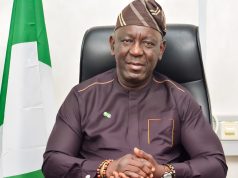
At the centre of the criticism is Harrison Jalla, Head of the PFAN Task Force and a former Nigeria international, who has openly rejected the planned adjustments to the federation’s electoral process.
Read Also: Outrage As NFF Praised Despite World Cup Failure! ‘A National Disgrace’ — Elumelu Slams Vote Of Confidence As Fans Fume
According to him, the changes being proposed are superficial and fail to address what he describes as a deep-rooted imbalance of power.
Jalla argued that although there have been slight increases in voting rights for players, coaches, and clubs, these adjustments remain insignificant when compared to the influence held by the dominant voting bloc. In his view, the system remains largely unchanged — and therefore incapable of delivering meaningful progress.
“The structure still favours the same interests,” he suggested, warning that without genuine reform, Nigerian football risks repeating the same cycle of underachievement and administrative gridlock.
His comments come amid growing pressure for governance reforms within the NFF, following concerns raised by key figures including National Sports Commission chairman Shehu Dikko. While there have been assurances that changes are underway, Jalla believes the current proposals fall far short of what is required to reset the system.
The implications, he warns, could be severe.
With Nigeria already grappling with disappointing performances on the international stage, including failure to qualify for major tournaments, Jalla cautioned that maintaining the status quo could lead to further setbacks.
He even raised fears that Nigeria could miss out on future competitions if the governance structure continues to limit fairness, inclusivity, and accountability.
For many observers, his remarks reflect a broader frustration shared across the football community — that reforms are often announced but rarely transformative.
The debate now centres on whether the NFF will take bold steps to truly redistribute power and modernise its electoral system, or whether it will settle for incremental changes that leave the core issues untouched.
As Nigerian football stands at a crossroads, Jalla’s warning rings loud: without real reform, the game may remain stuck — and the consequences could be felt for years to come.