
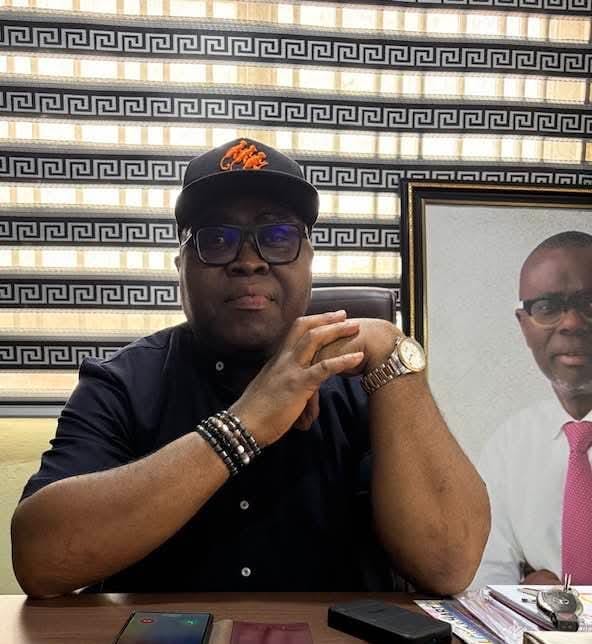
Otunba Bestman Nze Jumbo, popularly known as Beatman Nze Jumbo, has said that professional footballers are rewarded during their playing careers to take care of their life after football adequately, Sports247 reports.
READ ALSO: D’Tigress’ Coach Rena Wakama Declares: We Will Continue To Grow Towards Our Ultimate Target
They should plan responsibly for life after retirement instead of complaining about financial hardship later in life.
He made this submission in an exclusive chat with Sports247 in Lagos.
The President of Team Nigeria for Change emphasized that many footballers earn significantly more than professionals in other sectors, yet some fail to properly manage their finances.
According to him, a footballer earning about £10,000 per week makes roughly ₦20 million weekly in today’s exchange rate, which is far higher than the salary of many professionals.
“Take for example a footballer earning £10,000 per week. That is about ₦20 million weekly with the current exchange rate. Meanwhile, a teacher earns about ₦100,000 per month,” Nze Jumbo said.
He noted that while footballers usually retire around the age of 35, professionals in other fields such as teaching may work until the age of 60, making it important for players to properly invest and manage their earnings during their active years.
“This player will likely stop playing around 35 years of age, and whatever he has put together during his career is what must sustain him for the rest of his life if God grants him old age. Meanwhile, the teacher will continue working until 60. So in many ways, things are balanced,” he explained.
Nze Jumbo shared examples of former footballers who received financial help but still struggled due to poor financial discipline.
He recalled how a prominent Nigerian businessman once offered to help a former player start a business.
“I know a footballer whom the great Mike Adenuga asked what he wanted him to do for him, and he said he wanted a bakery. The bakery was built for him, but before long he had mismanaged it and the business collapsed,” he said.
He added that another player once requested to be placed on a lifetime salary arrangement instead of receiving business support, a request that worked out better for the individual.
“I have also seen players who were given advice but ignored it, and today they are struggling financially,” he added.
Despite this, Nze Jumbo acknowledged that governments in Nigeria have sometimes stepped in to assist former national team players who brought honour to the country.
“In Nigeria, the government sometimes rewards athletes who bring glory to the nation. In many cases when players were in crisis, state governments stepped in to assist them,” he said.
However, he stressed that discipline and personal responsibility remain essential for athletes even when support is available.
“We must balance these things. While we may blame the government sometimes, we must also look at the responsibility of the players themselves,” he stated.
Nze Jumbo also spoke about his own decision to retire early from football, revealing that knee problems played a major role in his choice.
“I stopped early because I began to have knee issues. I also realized that if you stop early, your body may remain stronger compared to those who play for too long,” he said.
He added that education was another factor that influenced his decision, recalling how his father once came to take him from camp so he could return to school.
Reflecting on the future of the game, he advised modern footballers to combine financial ambition with education and long-term planning.
“Some of us continued with our education while playing football, while others abandoned academics.”
“Young players today must understand that football will not last forever, so they must prepare for life beyond the game,” he advised.