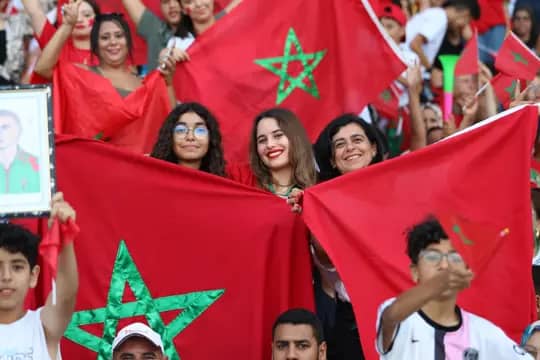
As the countdown to the TotalEnergies CAF Africa Cup of Nations Morocco 2025 enters its final stretch, excitement is sweeping across the host nation. Beyond the stadiums echoing with drums, chants and national colours, Morocco invites the world into a cultural embrace woven from centuries of language, identity and hospitality.
READ ALSO: Nigerian-born Female Boxer Caroline Dubois To Fight Same Night With Anthony Joshua, Jake Paul
For many of the thousands of fans preparing to walk the vibrant streets of Rabat, Marrakech, Tangier, Agadir and Casablanca, language will be more than a tool—it will be the warm gateway into Moroccan friendliness, humour, and the continent’s football spirit.
Understanding a few key expressions will not only help visitors navigate the country, but also allow them to feel Morocco, not merely visit it.
Here is a cultural journey through Morocco’s most important languages—each carrying its own history, personality and musical rhythm.
Darija: The Heartbeat of Moroccan Daily Life
If Morocco had a linguistic soul, it would be Darija, the fast-flowing, playful Arabic dialect spoken in markets, taxis, cafés and fan zones.
It is the sound of neighbours greeting one another at dawn, of vendors calling out to passersby, and of football fans debating line-ups with passionate flair.
A living blend of Arabic, Amazigh, French, Spanish and even English influences, Darija reflects Morocco’s centuries-old openness to the world.
Try this friendly greeting:
“Salam, kidayr?” — Hello, how are you?
Use it in a souk and you’ll almost certainly get a smile in return.
Amazigh: The Ancient Language of the Land
Long before bustling avenues and global tourism, the mountains, deserts, and oceans of Morocco echoed with Amazigh languages. Spoken across regions—from Tarifit in the north to Tamazight in the Middle Atlas and Tachelhit in the south—Amazigh is a living heritage proudly carried by millions of Moroccans.
It stands as one of the country’s official languages, displayed in the elegant Tifinagh script on public buildings and signage. For travelers venturing beyond the cities—into rural villages, mountain retreats or desert camps—Amazigh phrases become a bridge to some of the warmest hospitality you will ever experience.
Amazigh greeting:
“Azul, amek tgit?” — Hello, how are you?
Modern Standard Arabic: The Formal Voice of Morocco
While rarely used in casual conversation, Fus’ha—Modern Standard Arabic—remains Morocco’s official language of education, media and government. Fans tuning into national broadcasts, reading matchday coverage or listening to pre-match press conferences may hear this polished, formal Arabic.
Greeting:
“Marhaban, kayfa haluk?” — Hello, how are you?
French: The Language of Urban Flow
In Morocco’s big cities, you will often hear French woven into conversations, business transactions, menus, and transport systems. It connects Morocco with both West Africa and Europe, making it incredibly useful for many AFCON visitors.
In hotels, airports and restaurants, French sits comfortably alongside Arabic—another sign of Morocco’s cosmopolitan character.
Greeting:
“Bonjour, comment allez-vous ?” — Hello, how are you?
Spanish and English: Growing Brightly in the North and Among Youth
Morocco’s northern coastline—Tangier, Tetouan, Nador—carries a rich history with Spain, making Spanish widely spoken in daily life. Football conversations can switch easily from Arabic to Spanish, especially in cafés where matches from La Liga draw big crowds.
Greeting:
“Hola, cómo estás?” — Hello, how are you?
Meanwhile, English is rapidly becoming the language of the younger generation—students, tourism professionals and AFCON volunteers eager to connect with the world. You will find English speakers in hotels, airports, fan parks and across major tourist locations.
More Than Words: A Welcome That Needs No Translation
Visitors often say that Morocco’s greatest language is not spoken—it is felt. It lives in the way a stranger helps you find your way, how a café owner insists you try mint tea “on the house,” or how football fans invite you to join their chants even if you don’t know the words yet.
During AFCON, this spirit will be everywhere: in bustling medinas, in the Atlas mountains, across Atlantic beaches, and inside stadiums filled with colour and song.
So as the world gathers for Africa’s greatest football celebration, a simple phrase in Darija, Amazigh, Arabic, French or Spanish will go a long way. It tells Moroccans: “I see you, I respect your culture, and I’m happy to be here.”