
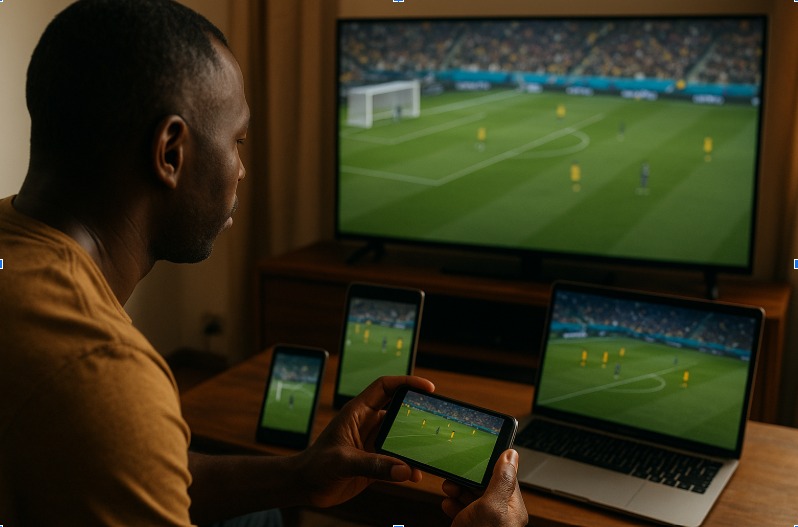
When football first reached radio waves more than a century ago, few imagined it would build one of the world’s largest media systems. Crowds gathered around small receivers, waiting for distant voices to describe each goal.
From that moment, the sport began shaping how information travelled. Television deepened the link, turning matches into shared national events. Then came the digital shift, when highlights and odds appeared in real time across every continent.
Modern football now lives inside an enormous digital framework. Broadcast rights, social platforms, and betting data move in one continuous stream.
Each layer feeds the next. Platforms such as https://1xbet.tz/en represent this transition, where live coverage and betting analytics coexist as parts of the same media engine rather than separate worlds.
Broadcasting before the digital age
Half a century ago, football’s influence on media was already visible. League schedules started adapting to television programming.
Sunday matches became routine not for tradition, but for prime-time audiences. Commentators grew into celebrities, their voices defining generations of fans.
This process blurred the line between sport and storytelling. Football created television moments that reached beyond stadiums, and the camera turned the match into an emotional narrative.
Viewership grew as rights deals expanded across borders, allowing new markets to join the same live experience.
Some long-term effects of this expansion include:
- Global audiences exceeding billions for major tournaments.
- Clubs receiving more from television contracts than stadium income.
- The rise of multi-language commentary serving regional audiences.
What began as simple coverage became a complete media economy.
The digital turn
The internet brought a different rhythm. Matches stopped being one-time events; they became continuous stories unfolding across platforms.
Streams replaced antennas, and social feeds replaced the morning newspaper. Viewers no longer waited for highlights – they appeared seconds after the final whistle.
Clubs learned to communicate directly through apps, bypassing traditional media filters. Meanwhile, data became public. Live odds, possession charts, and expected-goal metrics spread across platforms used by fans, analysts, and betting firms alike. Football content stopped being linear and turned into a web of constant interaction.
Data as currency
Information now drives football’s economy. Every touch, pass, and sprint becomes a data point ready to be sold, visualised, or analysed. For broadcasters, it builds new storylines. For bookmakers, it supports dynamic odds. For fans, it adds another layer of understanding.
The new structure of sports media revolves around:
- Databases tracking player movement in real time.
- Predictive systems that estimate match outcomes.
- Cloud servers hosting thousands of live betting feeds.
Numbers replaced rumours. Instead of hearsay about form or fitness, there are measured probabilities and performance indexes. Data has become football’s shared language.
A shared network of influence
Football connects countries through simultaneous broadcasts and shared attention. The same match viewed in Lagos, Madrid, and Buenos Aires carries identical timing and commentary. Broadcasters coordinate globally, while betting platforms synchronise odds and results to the same second.
This coordination has changed the definition of media itself. It no longer ends with reporting; it includes engagement, prediction, and replay. For players, it means visibility beyond performance. For leagues, it means value in every broadcast minute.
The lasting cycle
For many decades, football has served as the testing ground for every new communication format. Radio, colour television, satellite, and streaming all built their first mass audiences through this sport. Each step brought more access, more analysis, and tighter bonds between fans and the digital space around them.
Today’s football ecosystem reflects both tradition and constant reinvention. It turns movement into data, data into story, and story into commerce. Yet behind the layers of technology, the same emotion remains – the sound of a crowd reacting to a goal, echoing through a global network that football itself helped to build.